The 70% Opportunity: Meeting B2B Buyers Where Decisions Really Happen
I've watched B2B companies panic over a simple statistic: buyers complete 70% of their purchasing journey before ever contacting a vendor.
They see it as a crisis. I see it differently.
This shift isn't about losing control. It's about recognizing where influence actually happens—and showing up there with something worth talking about.
The Real Story Behind the 70%
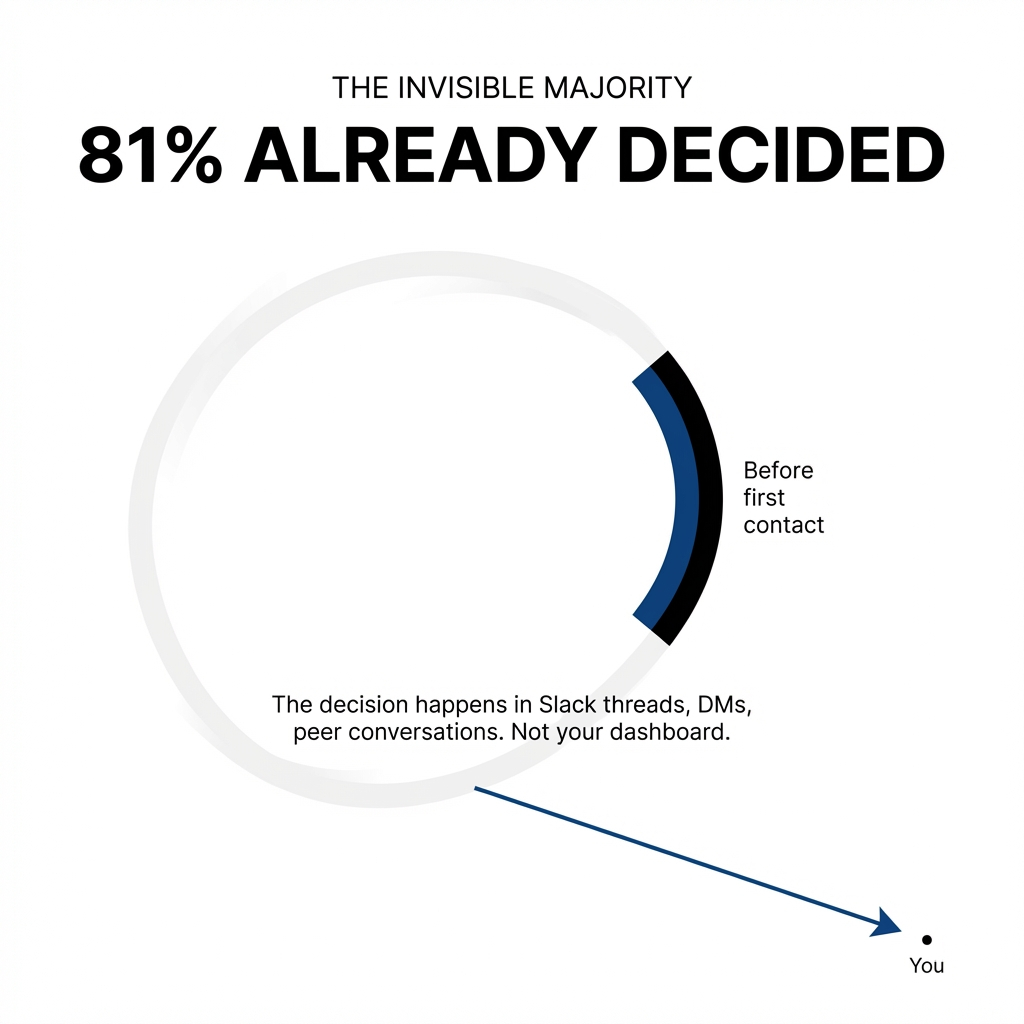
Here's what most teams miss: 81% of buyers already have a preferred vendor in mind at the time of first contact.
The decision isn't happening on your website. It's happening in Slack threads, LinkedIn DMs, and private conversations you'll never see.
Buyers spend that 70% validating vendors through peer-driven proof. They ask colleagues "Who are you using?" in community forums. They screenshot helpful answers and forward them to their team. They check review sites and comparison pages before they ever visit your pricing page.
By the time they reach out, the shortlist is already built.
What Actually Influences Buyers During That Silent Phase
Traditional attribution software tells you one story. Buyers tell you another.
There's a 90% measurement gap between what your dashboard reports and what actually drives decisions. Your analytics might credit "organic search" or "direct traffic," but when you ask buyers "How did you hear about us?" the real answers emerge:
"Someone in our RevOps Slack mentioned you."
"A colleague forwarded your framework."
"I saw you answer a question in a LinkedIn thread."
Here's the data that matters: 91% of B2B buyers are influenced by word of mouth when making purchasing decisions.
Peer recommendations aren't a nice bonus. They're the dominant force shaping vendor selection.
The Companies That Are Winning This Phase
The companies showing up in those peer conversations do something fundamentally different. They behave less like broadcasters and more like participants in networks they don't own.
They design for word-of-mouth, not just web traffic.
What this looks like in practice:
They invest in customer advocates and show up in niche communities where their buyers already gather. When someone asks "Who do you use for X?" in a Slack group, their name comes up organically because they've been helpful there.
They create "forwardable" content: frameworks, teardowns, simple tools that people actually want to screenshot and share in DMs. One sharp, useful asset beats ten forgettable ones.
They add a simple "How did you hear about us?" field on their forms and actually pay attention to the patterns. Within a quarter, they see which communities, podcasts, and peer channels are driving real pipeline.
The standout move? They assume the most important buyer interactions will be untracked and off-platform, and they build their entire strategy around that reality.
The Mindset Shift That Changes Everything
Here's the question that flips planning meetings on their head:
"How do we earn a story people will repeat when we're not in the room?"
This replaces "How do we capture this click?" as the primary filter for decisions.
When teams start asking that question, everything changes. Lead volume might drop initially, but sales gets happier. Pipeline becomes warmer. Cycles get shorter. Win rates improve.
The shift feels risky until the revenue data catches up. Then it becomes the new baseline.
Your First Move This Week
If you're ready to act on this today, here's the most practical first step:
Join one real buyer community this week and show up helpful, not promotional.
Find a Slack group, LinkedIn community, or industry forum where your ideal customers already gather. Have a founder or domain expert join with a personal profile. Spend the first few days observing.
Then pick one live question and post a concise, useful answer—a framework, a checklist, something screenshot-worthy. Don't pitch. Don't drop links. Just be genuinely helpful.
End with something like "If anyone wants the template I use for this, reply here and I'll share it." Keep the conversation in the community.
That single move puts your expertise where the actual peer conversations happen.
The Core Principle
The customer's network is the real channel.
Companies that adapt behave as if the most important marketing happens between buyers, not between brand and buyer. They design everything (content, measurement, budget) to make those peer-to-peer moments more likely and more frequent.
They judge ideas by "Will this change how our buyers talk to each other about this problem?" not "Will this get clicks?"
They see communities, advocates, and those invisible conversations as primary distribution. They systematically support, participate in, and learn from those networks instead of treating them as untrackable noise.
The 70% isn't a problem to solve. It's an invitation to show up where decisions actually happen: with value, expertise, and something worth repeating.
The question isn't whether buyers will complete most of their journey before contacting you. They will.
The question is whether they'll find you worth talking about when they do.


Comments
Post a Comment